

An unlimited final supply and an unlimited rate of issuance are different ideas. Dogecoin illustrates the difference. Its rules allow new DOGE to continue being created, but that does not mean anyone can mint an arbitrary amount whenever they choose.
This educational article explains the mechanism, not a price outlook. If someone uses the word “infinite” to settle an investment argument, ask which quantity they mean: the eventual supply ceiling, the coins created per block, or the percentage increase over a particular period.
Start with the block rule
Dogecoin Core's subsidy function returns 10,000 DOGE for the ongoing reward regime after its earlier reward stages. The mainnet parameters set a target block spacing of 60 seconds. A target is not a promise that every block arrives exactly one minute after the last.
Those rules provide a bounded issuance mechanism. Our explanation concerns the block subsidy, rather than a full calculation of a miner's compensation, which can also involve transaction fees. It does not audit the current circulating supply or count spendable balances.
The project's inflation FAQ summarizes the yearly issuance as five billion coins. Treat that as a rounded description of a block-driven process, not as a calendar appointment on which exactly five billion coins are released.
Work through an explicit example
At the one-minute target, a 365-day year contains 525,600 target block intervals. Multiplying that figure by a 10,000 DOGE subsidy gives 5,256,000,000 DOGE. This is our arithmetic using the cited parameters, not a measurement of blocks actually produced in a particular year.
Now use an entirely hypothetical starting supply of 150 billion coins. Adding 5.256 billion would increase that baseline by about 3.504%. Use a hypothetical baseline of 200 billion instead, with the same addition, and the percentage becomes about 2.628%.
| Hypothetical starting supply | Illustrative annual addition | Percentage increase |
|---|---|---|
| 150 billion DOGE | 5.256 billion DOGE | 3.504% |
| 200 billion DOGE | 5.256 billion DOGE | 2.628% |
Neither starting figure is presented as today's supply. The example isolates why a constant addition becomes a smaller percentage of a growing total.
Token issuance is not consumer-price inflation
Here, “inflation” means growth in the number of coins. It does not directly measure changes in the price of groceries, a household's purchasing power, or DOGE's exchange rate.
A percentage calculated from supply cannot tell us how many holders will sell, how much demand there will be, or the depth available to execute a trade. Even perfectly predictable issuance leaves those questions open. Our market-cap and liquidity lesson explains why a displayed valuation and an executable sale are different quantities.
The project FAQ presents continuing issuance as compatible with use as a currency. That is the project's argument about its design. It is not a finding here that Dogecoin must become widely used, maintain purchasing power, or outperform another asset.
Check the asset before checking its slogan
Dogecoin's introduction describes an open-source, peer-to-peer cryptocurrency maintained through a network of nodes. The subsidy code above belongs to Dogecoin Core. It should not be applied automatically to a token on another chain merely because that token has a dog mascot or the ticker DOGE.
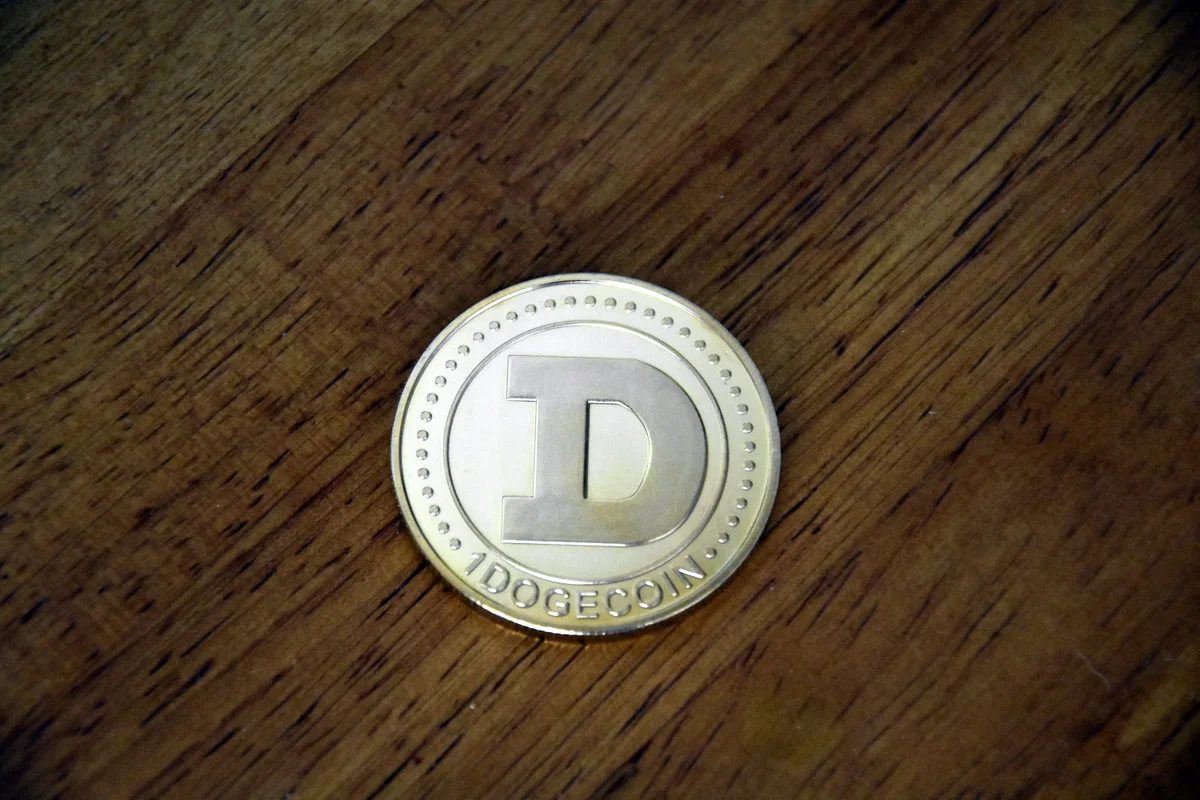
A represented asset may depend on a separate contract, issuer or bridge. Its relationship to native DOGE needs evidence. A physical souvenir, including the one in this article's photograph, is also not a balance on the network. Visual recognition helps a meme travel; it does not establish what asset a wallet holds.
Questions worth asking about the next meme
Separate three checks: what creates new units, who can change the relevant rules, and what evidence identifies the asset. Then evaluate ownership concentration and liquidity independently. A capped token can still have distribution problems; continuing issuance alone does not establish a rug pull.
This guide reviews accessible documentation and source code on October 5, 2026. It makes no claim about future governance decisions, current balances or a profitable strategy. Read the chain comparison, our security evidence framework, and the Dogecoin NASCAR case. Learn brings the fundamentals together.
Original AI-assisted explanation. Photograph by Cyril Ernst, licensed CC BY-SA 4.0 with the adaptation under the same license. Corrections: Hello@dev.cooking.