

GMGN is borrowing the structure of an esports qualifier for a competition built around live meme-coin trading. The multi-chain trading terminal announced its first Global Championship on October 9, with a ten-day online qualifier scheduled for October 17 through October 27 UTC and an in-person final promised for London.
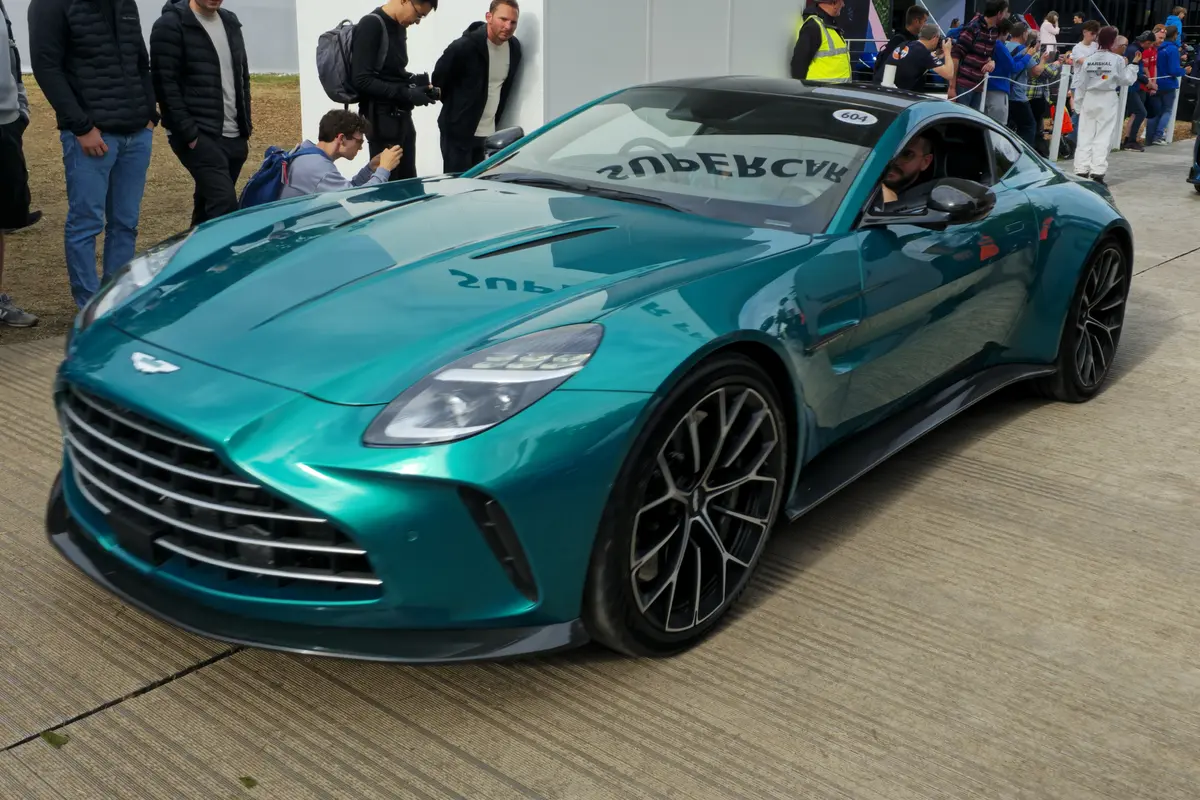
The headline prize is a one-of-one Aston Martin Vantage described by GMGN as edition number 001. More revealing than the car, however, is the format. The official championship page says six traders will reach the London final. GMGN founder Haze's launch announcement presents the event as ten days of live memecoin trading, while TechFlow's October 9 report says entrants will use dedicated Solana and EVM wallets, trade with no more than $2,000 of their own capital and be ranked by realized profit and loss shown on a live leaderboard.
This is not a token launch or an investment recommendation. It is a new attempt to turn the normally private, chaotic process of meme trading into scheduled spectator content with a visible score.
What the announced qualifier measures
The reviewed announcement sets out four important boundaries:
- The online qualifier runs from October 17 through October 27 UTC.
- Each participant uses dedicated Solana and EVM wallets generated for the competition.
- Personal starting capital is capped at $2,000.
- The leaderboard uses on-chain realized profit and loss rather than an account's displayed unrealized gains.
TechFlow reports that the trades will be livestreamed, with daily winners receiving a platinum GMGN badge. The top six are promised flights, hotel accommodation and visa costs for the London final. The championship page identifies the number of finalists, but the reviewed public material does not give a London date, venue or the detailed final-round scoring format.
Those missing details matter because the qualifier and final are different events. Registration can be open and the qualifier can be scheduled without the London production being complete. Until GMGN publishes the final rules and holds the event, travel support and the car remain organizer promises rather than delivered prizes.
Dedicated wallets make part of the contest auditable
Meme-coin trading contests often rely on exchange account records that outsiders cannot inspect. Dedicated blockchain wallets change that. Anyone can preserve the addresses, verify transactions and compare a leaderboard entry with transfers recorded by the relevant network.
GMGN already describes its core product as a cross-chain meme terminal with wallet profit-and-loss analytics, token monitoring, holder analysis and automated trading. Its official product overview says it covers Solana, BNB Smart Chain, Base and Ethereum. A tournament based on separate Solana and EVM wallets therefore turns existing tracking features into the competition infrastructure.
On-chain visibility is useful, but it is not a complete rule book. A transaction record shows what an address sent and received. It does not, by itself, explain whether organizers will count deposits, transfers between a participant's two wallets, airdrops, referral rebates, gas, priority fees, failed trades or tokens that cannot be sold. Realized P&L also depends on a definition of realization and the price assigned to anything received outside an ordinary swap.
The strongest version of the contest would publish that accounting method before trading begins, then preserve the wallet list and leaderboard after the qualifier ends. Without those records, “on-chain” can become a marketing adjective instead of a reproducible result.
A $2,000 ceiling narrows one advantage, not every advantage
The capital cap is a meaningful design choice. It prevents a participant from winning simply by deploying a much larger bankroll than everyone else. It also makes the qualifier more legible than a contest with unlimited deposits.
It does not make the field equal. Traders can differ in automation, private information, execution speed, transaction priority, audience reach and willingness to take concentrated risk. A trader who promotes a thin token while buying it from a public contest wallet could also influence the market being measured. The reviewed announcement does not say that any of those behaviors occurred. They are rule questions the organizer must address because meme markets are often shallow enough for the contest itself to affect prices.
Realized P&L creates another incentive. It rewards closed gains, which avoids counting a temporary paper profit as a win. But a raw dollar ranking may favor a participant who risks the full allowance over one who starts smaller, and it says nothing about the drawdown or liquidity required to exit. A useful leaderboard should show starting capital, deposits, withdrawals, fees and closed positions alongside the headline result.
Meme trading is becoming spectator culture
The Aston Martin is designed to make the event travel beyond a terminal's existing users. The London final and livestreaming language move GMGN toward esports and creator competitions, where a platform packages skilled or risky behavior into a show and the prize becomes part of the story.
That shift is culturally relevant even if the tournament never identifies a lasting trading champion. It asks whether a verifiable wallet history can replace screenshots and selective winning trades as proof of performance. It also puts pressure on GMGN to distinguish a transparent competition from an advertisement for high-risk trading.
Readers following the event should save the rules and wallet addresses when the qualifier opens, then compare the final leaderboard with the underlying transactions. Dev.Cooking's guide to why holder addresses are not automatically people explains the attribution limit, while liquidity versus market capitalization shows why a profitable quote is not the same as an executable exit. The meme-coin archive tracks related launch-platform and community developments.
Reporting and image notes
Original Dev.Cooking news analysis based on GMGN's October 9 announcement, current championship page, official product overview and independent TechFlow report, all reviewed on October 10, 2026. The sources establish the scheduled qualifier format and announced prizes, not that the qualifier or London final has occurred. They do not establish future delivery, equal trading conditions or that leaderboard accounting will resolve every transfer and fee question. The cover is Calreyn88's real July 12, 2024 photograph of a 2024 Aston Martin Vantage V8 at the Goodwood Festival of Speed, released under CC BY-SA 4.0. It shows the announced model family, not GMGN's promised custom edition, a finalist or the London event. The photograph was center-cropped, resized and converted to WebP without adding or removing objects. The adapted files are shared under the same licence. No endorsement is implied. Corrections: Hello@dev.cooking.