
.jpg)
SafeMoon put a reassuring word in front of a complicated control system: locked. To a buyer, locked liquidity could sound like money placed somewhere the team could not touch. The record that eventually reached a federal jury turned on a different layer. The pool held assets, but control over the LP tokens could still provide a route back out.
This ninth Meme Autopsy is historical analysis, not breaking news. It follows the original SafeMoon V1 contract, the public protection claim, the later criminal verdict and the final sentence imposed on former chief executive Braden Karony. It does not convert every allegation in a civil complaint into a finding, and it does not pretend that Dev.Cooking independently traced every wallet used in the case.
Start with the asset the case was about
SafeMoon launched on BNB Smart Chain in March 2021. The archived contract repository describes the protocol as combining reflection-style tokenomics with automatic liquidity generation. The V1 explorer record identifies the original token contract as 0x8076c74c5e3f5852037f31ff0093eeb8c8add8d3 and now labels it as migrated.
That address boundary matters. SafeMoon later moved to a V2 token. The federal records discuss the project, its original token mechanics, its liquidity pools and conduct by named people across a period of time. They are not a security score for every contract that uses the SafeMoon name, and they should not be pasted onto an unrelated copycat token.
The original mechanism charged a 10 percent tax on transactions. Government records say half was intended to be reflected to holders and half was intended for liquidity. That structure made the liquidity story part of the product itself, rather than a side detail hidden from buyers.
A liquidity pool can be full while its exit key remains usable
The SEC’s November 2023 complaint alleged that SafeMoon marketing told buyers the liquidity generated by transactions would be locked for years, that automatic liquidity made a developer rug pull impossible, and even used the phrase “Completely Rug Free.” Those were the regulator’s allegations in a civil pleading, not the criminal verdict by themselves.
The complaint also explains the missing middle. Depositing a token pair into an automated market maker produces LP tokens. Those LP tokens represent the depositor’s interest in the pool and can normally be redeemed for the underlying assets. A time lock on one batch of liquidity does not automatically lock every LP token created later, every administrative path or every wallet able to redeem an interest.
That is the useful technical lesson. “Liquidity exists” answers one question. “Who can remove it, by presenting which LP token or invoking which privileged function, and after what delay?” answers a different one. A lock badge that does not identify the specific asset, holder, contract and expiry leaves the most important nouns unstated.
According to the SEC complaint, LP tokens generated from the transaction tax remained available to the defendants and allowed withdrawals from the pool. The complaint alleged that assets were removed despite public statements about protection. At that stage, those assertions still required proof in court.
The criminal case moved the core conduct beyond allegation
On November 1, 2023, federal prosecutors charged Karony, SafeMoon creator Kyle Nagy and former chief technology officer Thomas Smith. The criminal cases did not end in the same posture for all three people.
The May 21, 2025 verdict announcement says a federal jury convicted Karony on all three counts after a 12-day trial: conspiracy to commit securities fraud, wire fraud and money laundering. The same announcement describes the liquidity representations and states that, as proven at trial, insiders retained access and used it to divert assets for personal benefit.
That language is materially different from an indictment. The jury verdict established Karony’s criminal guilt on the charged counts. It did not produce a finding against every person ever associated with the token, every promoter who mentioned it or every anonymous wallet discussed online.
Smith followed another path. The later sentencing record says he pleaded guilty in February 2025 to conspiracy to commit securities fraud and wire fraud and was awaiting sentencing as of that update. Nagy remained at large as of the same dated source. We do not convert that status into a conviction or claim to know what later occurred without a newer official record.
The sentence fixed some numbers and left another open
The February 10, 2026 sentencing announcement records Karony’s sentence as 100 months in prison. It says the court ordered approximately $7.5 million in forfeiture and that the amount of restitution would be determined later.
Those quantities should not be blended. Forfeiture concerns assets the defendant must surrender. Restitution concerns repayment for victim losses and was not fixed in the cited announcement. The government also said Karony acquired more than $9 million in crypto assets through the scheme. That figure is not interchangeable with forfeiture, total investor losses or a current token market value.
The sentencing release says the jury also returned a forfeiture verdict involving two residential properties. It describes uses of proceeds that included real estate and luxury vehicles. Dev.Cooking has not reconstructed the purchase trail or independently assigned every transaction to a person. We report the outcome the government says was proven at trial and the amounts the court record fixes, without inventing a larger on-chain total.
The dated receipts
| Date | What the reviewed record establishes |
|---|---|
| March 1, 2021 | The SEC complaint identifies the SafeMoon token launch on Binance Smart Chain and the initial supply mechanics. |
| March 6, 2021 | The SEC complaint dates the original website and its liquidity-protection claims. |
| April 20 to 21, 2021 | The complaint records a public challenge to the lock claim, a sharp price decline and the project’s response. These remained civil allegations when filed. |
| November 1, 2023 | Federal prosecutors unsealed criminal charges; the SEC filed its separate civil complaint. Charges were allegations at that point. |
| February 2025 | The 2026 sentencing release records Smith’s guilty plea to two conspiracy counts. |
| May 21, 2025 | A federal jury convicted Karony on all three charged counts after trial. |
| February 10, 2026 | The court sentenced Karony to 100 months and ordered approximately $7.5 million in forfeiture; restitution remained unresolved in the announcement. |
| October 6, 2026 | Dev.Cooking rechecked the criminal outcomes, civil complaint, V1 explorer identity, archived code and image license. |
Verified, alleged and unknown
| Status | Finding |
|---|---|
| Verified in reviewed records | The original V1 contract identity; the transaction-tax and liquidity design described in the official records; Karony’s jury conviction, prison sentence and forfeiture order; Smith’s recorded guilty plea. |
| Alleged in the SEC civil complaint | Specific marketing statements, wallet movements, price-support purchases and the civil-law characterization of the token offering. The complaint is evidence of what the SEC alleged, not a substitute for a final civil judgment. |
| Unknown in this review | A complete independent wallet reconstruction; final restitution; Smith’s later sentencing status; Nagy’s status after the dated DOJ update; the outcome of every separate civil or bankruptcy proceeding. |
SafeMoon’s case is a warning against compressing custody into one word. A useful liquidity check names the pool, the LP token, its holder, the lock contract, the unlock condition and any administrative route around it. Without that chain, “locked” can describe the appearance of protection rather than the limits on control.
For the practical method, read our liquidity and exit guide, token launch signals guide and security evidence framework. More foundations are in Learn.
Reporting and image notes
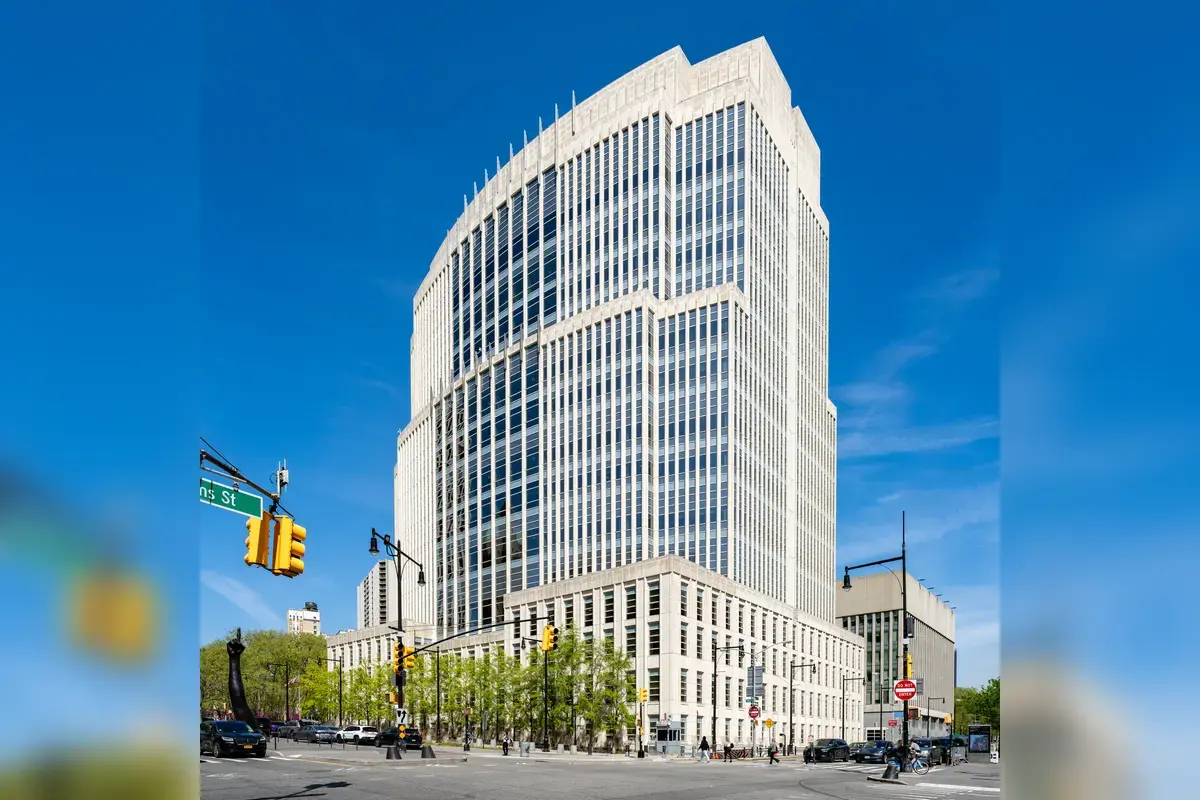
Original AI-assisted document research and analysis. Criminal charges, civil allegations, a guilty plea, a jury verdict and a sentence are identified separately. No interview, private record, complete wallet attribution, victim-loss calculation, current-price claim or legal advice is presented. The cover is Ajay Suresh’s real April 23, 2026 photograph of the Theodore Roosevelt United States Courthouse, licensed CC BY 4.0 and photographed after Karony’s sentencing. It was fitted to the article frame over a blurred extension of the same image, resized and converted to WebP. It is not a token image, trial photograph or transaction record, and no endorsement is implied. Corrections: Hello@dev.cooking.