
A meme can spread faster than the address of the token using it. That creates a practical problem: a trader recognizes the joke, searches the ticker and sees several charts with the same name. The recognition is real. The identity of the asset still needs work.
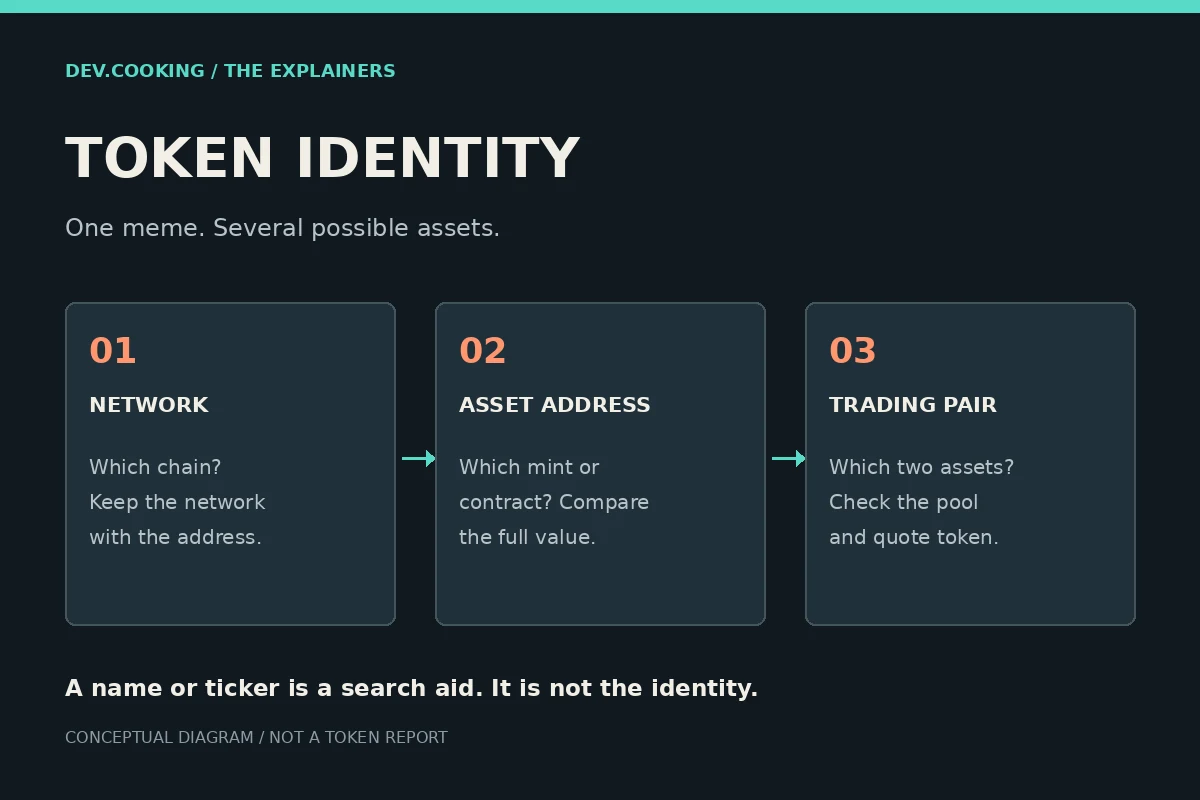
The useful starting point is a pair of fields: the network and the full mint or contract address. Keep them together throughout the trade. A familiar logo is not a substitute, and a price chart is evidence about the asset behind that chart rather than every asset sharing its name.
A name is a search aid
The ERC-20 standard describes a token interface and includes optional name and symbol methods. It does not allocate a globally unique ticker to a project. A symbol can make a wallet easier to read without establishing a relationship to a well-known community.
That is why a search result should be treated as a candidate. Imagine two hypothetical assets named PIZZA on the same network. One has the address published by a project; the other was created independently. The spelling cannot resolve the difference. The complete addresses can.
Avoid using a shortened address as the final comparison. First and last characters are convenient display fragments, but the record you save should contain the complete value. Copy the identity from a reliable project record and compare it with the identity shown by the destination tool.
Solana identifies the mint
The Solana documentation describes the mint account as the identifier for a token. Its state includes supply, decimals and relevant authorities. The balance account holding tokens is a separate piece of the model.
For a reader, the important consequence is simple: do not replace the mint address with the address of a holder account or a liquidity pool. Those may all appear near the same token name in an explorer, but they describe different objects. Ask the interface which object it is displaying before copying it into another tool.
A pool can contain the mint you intended while also using a quote asset you did not expect. Identity work therefore continues beyond finding the token. Save both sides of the pair and the pool itself.
Keep the network attached
An address string needs chain context. If your wallet is on one EVM network and your research concerns another, the displayed asset, deployment or balance may describe a different situation. Moving between compatible interfaces does not make the underlying networks interchangeable.
For a hypothetical research note, write “Network A, full address, pool address” rather than only “PIZZA.” If you later compare a record from Network B, label that separately. Do not merge the records merely because a ticker, website description or address string looks familiar.
This approach also helps when a project announces a cross-chain version. The announcement is a source to investigate. Verify the asset on each network and the mechanism connecting them before assuming supply or redemption relationships.
Follow the source to the pair
Build a short chain of checks. Locate the project’s published address. Open the corresponding explorer record. Confirm the asset identity in the pool. Finally, confirm the route that the wallet would use for the intended action. Each step should preserve the same network and asset.
If the project has several official sources, compare them. A disagreement is an unresolved discrepancy, not a reason to choose the result with the most attractive chart. If the original source cannot be established, record that limit. A functioning contract is not itself proof that a particular organization authorized it.
The same rule applies to wallet labels and verification badges. Ask what the label establishes. A name may come from an external database; a badge may describe a platform’s own review. Neither should silently replace the address comparison.
Save a reproducible identity note
Use five fields: network, full asset address, project source URL, trading-pair identity and check time. Add the explorer URL for each object. Another person should be able to follow the links without guessing which search result you selected.
This note resolves a narrow but essential question: which asset are you researching? It does not establish a fair launch, independent demand, safe permissions or an easy exit. Those require additional evidence. The meme coin field manual keeps those later checks separate so identity is not mistaken for a complete verdict.