

The Commodity Futures Trading Commission opened a rulemaking process on October 5 that could create a federal route for crypto exchanges offering leveraged, margined or financed trades to retail customers. It is a significant market-structure proposal. It is not a federal seal on every meme coin, and it would not automatically pull an ordinary cash purchase on a spot exchange into the same framework.
That boundary is the part meme-coin traders need to see. A platform can display the same fast-moving token in a simple spot market, a margin product and a perpetual contract. Those products can look adjacent on a screen while carrying different regulatory treatment, custody arrangements and liquidation risks.
What the CFTC actually started
The CFTC’s October 5 announcement is an advance notice of proposed rulemaking, commonly called an ANPRM. It asks for information that could shape later rules for retail commodity transactions involving crypto assets under section 2(c)(2)(D) of the Commodity Exchange Act.
The agency calls those transactions CTXs. The key trigger is not whether a token has a dog, frog or political slogan attached to it. The contemplated framework addresses retail crypto transactions offered on a leveraged, margined or financed basis. It also asks whether the agency should create a tailored subcategory of designated contract market called a crypto asset market, or CAM.
This is an early rulemaking step, not an adopted rule. The CFTC says written comments will be due 60 days after the notice appears in the Federal Register. The agency may use those comments for future action. Until a final rule is adopted and effective, the questions in the notice are proposals and requests, not new operating requirements.
The spot-market limit matters
In remarks delivered at Fordham Law, CFTC Chairman Michael Selig described a three-rung model. Ordinary spot exchanges occupy the first rung. The CFTC has anti-fraud and anti-manipulation authority there, but Selig said those businesses are otherwise generally overseen through state money-transmission regimes.
The second rung covers platforms that let retail customers trade crypto on margin, with leverage or through financing. Those are the transactions at the center of the new CTX and CAM work. A third rung covers venues offering futures, perpetuals and other derivatives under the existing derivatives framework.
Selig also said only Congress can require all crypto exchanges to register with the CFTC. That means the proposal should not be summarized as “the CFTC will regulate every crypto exchange.” The federal option described in the remarks is narrower, and the ordinary spot-market gap remains.
For a meme trader, the product label matters more than the mascot. Buying a token with settled cash is not the same transaction as borrowing against collateral to take a larger position. A leveraged product can add liquidation rules, financing costs and intermediary exposure to the token’s existing contract, liquidity and concentration risks.
What a CAM could be required to examine
The chairman’s remarks outline several possible protections for a registered CAM. They include market-surveillance duties, customer-fund safeguards, conflict controls and system protections derived from the core principles that already apply to designated contract markets.
The speech says a CAM evaluating a crypto transaction may need to consider how the asset was distributed, how concentrated ownership is, whether tokens are locked or vesting, and whether programmatic issuance or buybacks could affect manipulation risk. Those are especially relevant questions for meme coins, where a launch can distribute supply across a small number of wallets before a wider community forms.
The framework also contemplates proof-of-reserves obligations when an exchange holds customer property in omnibus accounts. Selig discussed futures commission merchant intermediation, including disclosure, capital and customer-property segregation responsibilities. He further proposed treating delivery to a user’s external non-custodial wallet within 28 days as generally satisfying an “actual delivery” exception.
Each verb matters. The framework contemplates these controls. The CFTC has not announced that every exchange now complies with them, that a particular reserve report has been audited, or that a listed meme token has passed a federal safety test.
Registration would not validate a meme coin
A regulated venue and a safe asset are different claims. Even if a future CAM reviews concentration, lockups and issuance mechanics before listing a transaction, registration would not prove that a token’s marketing is truthful, its community accounts are authentic or its liquidity can absorb a holder’s exit.
It would also not replace contract-level checks. A trader would still need the exact chain and contract address, current authority settings, holder distribution and the conditions governing any liquidity lock. A platform’s custody controls cannot remove defects or hidden privileges in a token contract.
Proof of reserves has a similar limit. It can address whether an intermediary holds assets associated with customer balances, depending on the method and scope used. It does not establish that a token has durable demand, fair distribution or reliable price discovery. It also does not identify liabilities unless the review includes them.
That distinction is why the CFTC proposal is important without being a blanket safety story. It could change the rules for intermediaries offering a particular type of retail crypto transaction. It cannot turn a speculative meme into a vetted investment.
Confirmed, proposed and still open
| Status | What the reviewed record supports |
|---|---|
| Confirmed | The CFTC published the ANPRM on October 5, 2026 and opened a process focused on retail leveraged, margined or financed crypto transactions. |
| Proposed | A tailored CAM registration route, crypto-specific listing considerations, proof-of-reserves duties, FCM intermediation and an external-wallet interpretation of actual delivery. |
| Not covered as a blanket rule | Every ordinary spot crypto exchange and every cash purchase of a meme coin. The chairman said Congress would have to mandate registration for all exchanges. |
| Still unknown | The final text, implementation dates, which firms would seek CAM status, how the agency would test compliance and how any final rules would survive future legal or political challenges. |
The next evidence point is not a slogan from an exchange or a token account. It is the official Federal Register notice, the public comment record and any later proposed rule. Readers should treat claims that a platform or token is “CFTC approved” with skepticism unless an official registration record and the precise covered activity support that wording.
For the token side of the equation, use our contract and launch-signal checklist, liquidity and exit guide and security evidence framework.
Reporting and image notes
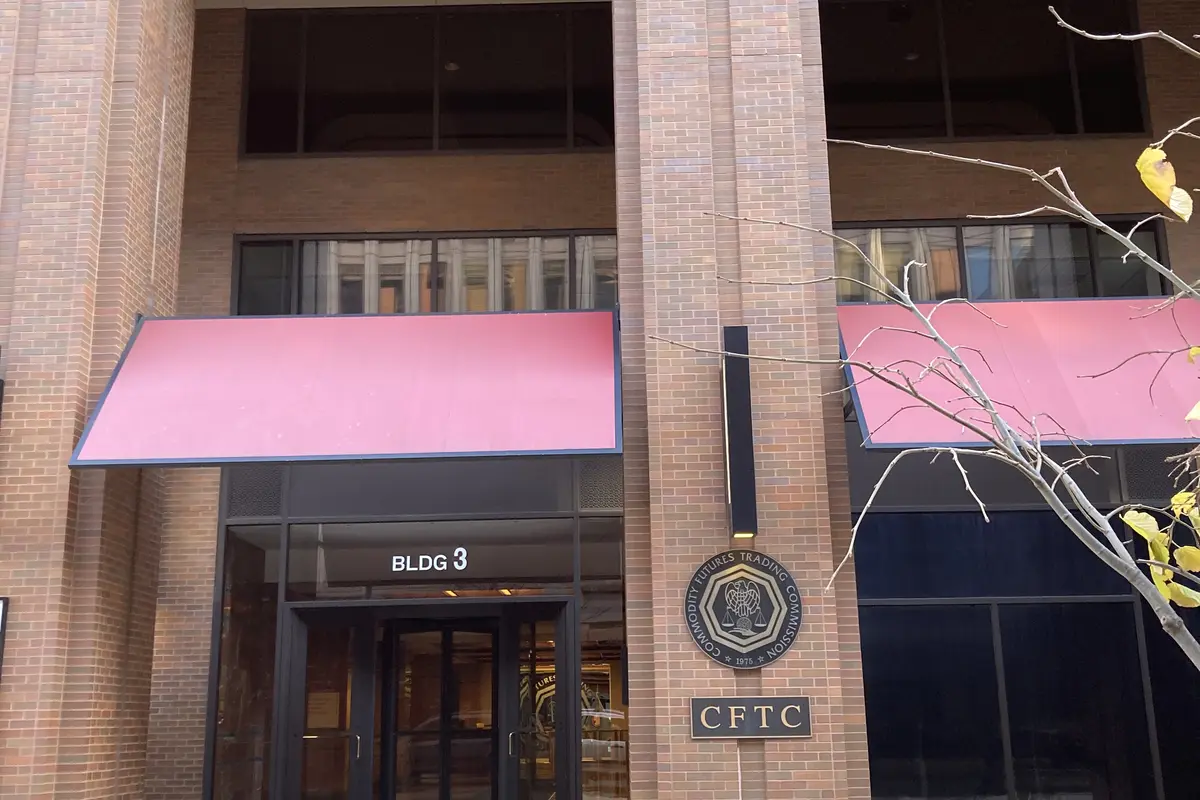
Original Dev.Cooking news analysis based on the CFTC’s dated announcement, the chairman’s detailed remarks and Reuters’s independent report, all reviewed on October 6, 2026. The article separates the agency’s completed action from contemplated rules and does not present registration as token approval, legal advice or a guarantee against loss. No interview, private record or prediction of the final rule is claimed. The cover is Dclemens1971’s real December 5, 2024 photograph of CFTC headquarters, licensed CC BY 4.0. It was auto-oriented, cropped, resized and converted to WebP. No endorsement is implied. Corrections: Hello@dev.cooking.