
ConstitutionDAO lasted only weeks, but its token did not disappear when the group lost the auction it was built to win. That split is the heart of the story. The organization closed, refunds opened and the official site said PEOPLE carried no continuing governance rights. The transferable token could still circulate because the community’s original purpose and the token contract were not the same thing.
This eleventh Meme Autopsy is historical research, not breaking news. It follows the fundraiser, the failed bid, the refund design and the record left for PEOPLE holders. It does not treat later trading as proof that ConstitutionDAO remained active or that a buyer acquired a share of the Constitution.
A single-purpose community moved faster than an auction calendar
The Sotheby’s auction record dates the sale window from November 4 to November 18, 2021. ConstitutionDAO formed around one objective: pool enough Ether to bid on the privately owned Goldman copy of the first printing of the final constitutional text.
Sotheby’s later described a crowd of more than 17,000 contributors raising more than $40 million in Ether within weeks. Its retrospective account records a final price of $43.2 million and says ConstitutionDAO was outbid by Kenneth Griffin, whose bidding identity was not public during the auction.
Those numbers describe the fundraiser and sale, not an amount that token holders lost. The group did not spend the pooled ETH on the document. The next question was how contributors could recover their contributions.
PEOPLE was not a fractional deed to the document
The official ConstitutionDAO wind-down page gives contributors two actions. They can claim PEOPLE associated with their contribution, or redeem claimed or unclaimed PEOPLE for ETH. The page states a redemption ratio of 1 ETH for 1,000,000 PEOPLE, minus network fees, matching the original contribution ratio.
More important is the page’s statement about rights. After the failed bid and wind-down, ConstitutionDAO said PEOPLE possessed no rights, governance or utility other than redemption from the Juicebox smart contract. It also said holders could keep the token and use it as they pleased, while making clear that the closed project would not endorse later plans.
That boundary prevents three common misreadings. PEOPLE was not a share of the auctioned Constitution. Holding it after the wind-down did not make someone a voter in an operating ConstitutionDAO. Market trading did not revive the original organization by itself.
The current Etherscan token record identifies the Ethereum PEOPLE contract as 0x7a58c0be72be218b41c608b7fe7c5bb630736c71. That address is the stable identifier for the token record reviewed here. The ticker alone is not sufficient because names and symbols can be copied on other contracts and chains.
The refund was a contract path, not a bank reversal
Juicebox’s configuration review says the fundraiser used a 9-of-13 multisignature wallet and a Juicebox project. It explains that the overflow mechanism was intended to let contributors redeem if the bid failed. According to the review, the team enabled refunds after the loss and burned the project keys, ending the core team’s control of that Juicebox project.
This arrangement matters because “refund available” does not mean ETH automatically returned to every contributor. A participant had to use the redemption path, and the official page warns that gas fees are deducted. The contract ratio and transaction costs are separate facts: the ratio defined the claim, while the network determined the cost of executing it.
Keeping PEOPLE was also a choice with a different consequence. Once someone kept a transferable token instead of redeeming it, the token could move independently through wallets and markets. Its continued existence said nothing by itself about whether the original DAO, auction plan or governance promises continued.
The dated receipts
| Date | What the reviewed record establishes |
|---|---|
| November 4, 2021 | Sotheby’s sale window opened for the Goldman Constitution. |
| November 18, 2021 | The sale window closed; Sotheby’s records a $43.2 million result. |
| After the failed bid | ConstitutionDAO opened claims and redemptions at the stated original ratio, minus gas fees. |
| Wind-down | The official site said the single-purpose project had run its course and disclaimed governance or utility beyond redemption. |
| October 9, 2026 | Dev.Cooking rechecked the official site, Juicebox configuration, auction record, token address and image rights. |
Verified, interpretive and unresolved
| Status | Finding |
|---|---|
| Verified in reviewed records | The auction dates and result, crowd size and amount described by Sotheby’s, refund ratio, wind-down language and current Etherscan contract identity. |
| Dev.Cooking interpretation | PEOPLE outlived the project because a transferable token can continue circulating after the organization and purpose that created it have ended. |
| Not established here | The identity of every contributor or current holder, the economic result for any holder, ownership links among wallets, or endorsement of any later PEOPLE community project by ConstitutionDAO. |
ConstitutionDAO’s most useful lesson is not that a meme-driven crowd almost won an auction. It is that a token can preserve a community symbol after its formal rights have expired. Before buying a legacy community token, read the issuer’s closing statement, identify the exact contract and ask what enforceable claim remains today.
Continue with how to read a token holder list, why market cap differs from liquidity and the token-launch evidence checklist.
Reporting and image notes
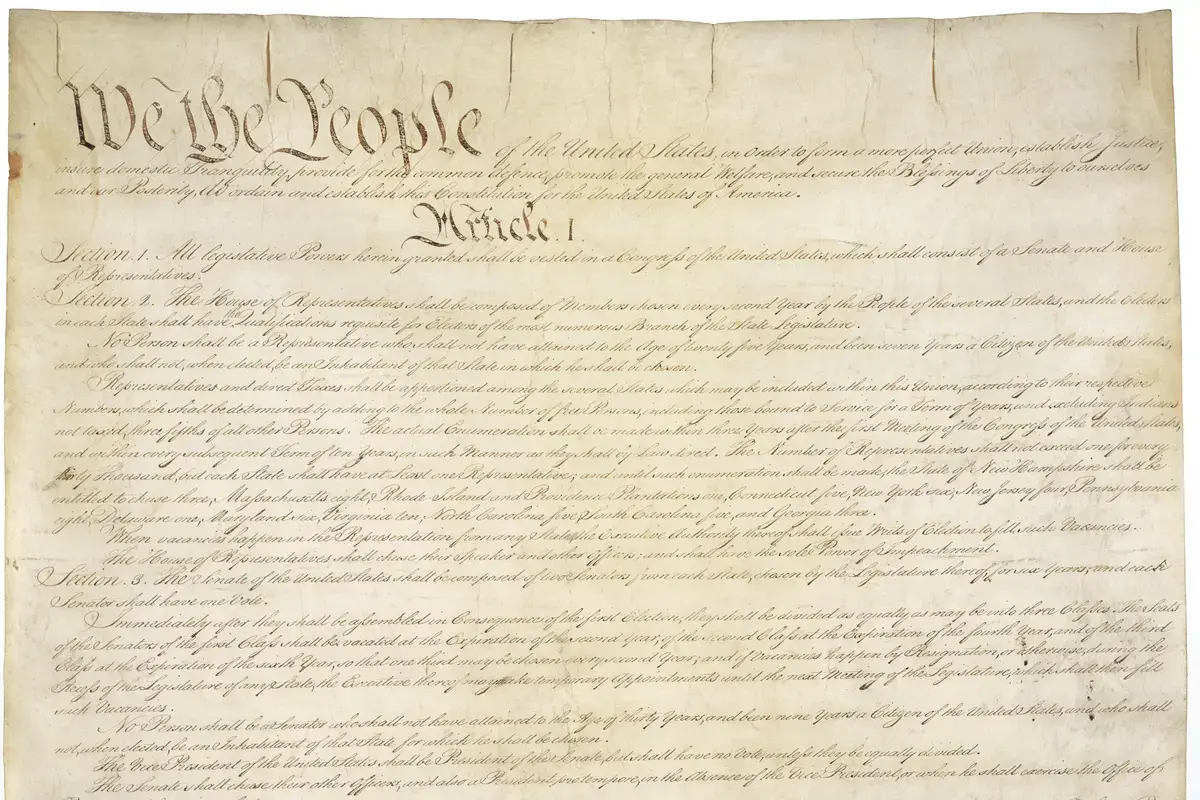
Original AI-assisted historical analysis based on ConstitutionDAO’s surviving site, Juicebox documentation, Sotheby’s auction records and the current Etherscan token page. No current-price claim, holder-identity inference or investment recommendation is made. The cover is the signed Constitution held by the U.S. National Archives, not the privately owned first printing sold in 2021. The National Archives download page states that its founding-document images are public domain and asks to be credited as the source. The scan was cropped, resized and converted to responsive WebP files. Corrections: Hello@dev.cooking.