
.jpg)
Kishu Inu presented itself in 2021 as a community-owned token with a fair launch and no supply reserved for the team. A federal indictment filed more than five years later alleges a different origin: secret founder allocations, public reassurances and sales by wallets allegedly controlled by the token’s creator.
That conflict is the subject of this twelfth Meme Autopsy. It is historical research, not breaking news, and it does not decide guilt. An indictment contains prosecutors’ allegations, not court findings. The defendant, Alexander Sisemore, is presumed innocent unless proved guilty beyond a reasonable doubt.
What prosecutors allege
The U.S. Attorney’s Office for the Northern District of Illinois announced the indictment on October 7, 2026. It says Sisemore was charged with three counts of wire fraud in an alleged $9 million scheme involving Kishu Inu. The announcement says an arraignment had not yet been scheduled when it was published.
The indictment filed October 6 identifies Sisemore as Kishu Inu’s founder and creator. It alleges that the scheme ran from no later than April 2021 through at least October 2023. Prosecutors say KISHU reached a market capitalization above $1.6 billion and was held by about 283,000 people. Those figures describe the scale alleged in the charging document, not a loss calculation.
The central allegation is about distribution. According to the indictment, the initial developer created 100 quadrillion KISHU on April 17, 2021, then transferred about 6% of the total supply to four wallets controlled by Sisemore and another roughly 6% to four wallets controlled by the developer before public trading began. Prosecutors allege that the public was instead told there had been a fair launch, no tokens were reserved for the team and the creators bought on the open market.
The charging document says Sisemore later made about $9 million from selling KISHU while the developer made about $800,000. Three wire-fraud counts identify particular Gate.io conversions in October and November 2021. These transaction descriptions and profit figures remain allegations. The indictment’s forfeiture request is also conditional on conviction.
The contract answers a narrower question
Kishu Inu’s surviving original contract repository identifies the Ethereum contract as 0xA2b4C0Af19cC16a6CfAcCe81F192B024d625817D. The published Solidity source sets a fixed total supply of 100 quadrillion tokens. Its constructor assigns the reflected supply to the deployer and emits the initial transfer from the zero address.
That source is useful, but it does not by itself reveal who ultimately controlled every recipient wallet. It establishes the contract’s creation logic. The indictment makes the separate claim that some pre-public transfers went to wallets controlled by insiders. Proving that control requires transaction records and evidence connecting people to addresses, not code alone.
The source also includes an ownership-renunciation function. Renouncing a contract can disable functions restricted to its current owner. It cannot erase earlier transfers, prove that insiders never received tokens or turn a marketing statement into a verified fact. Contract authority and launch allocation are different questions.
Why the fair-launch language mattered
A fair-launch claim is not decoration when it addresses the exact risk buyers are evaluating. If a team holds a material undisclosed allocation, it may be able to sell into demand created by public promotion. A statement that the founders bought like everyone else presents a very different distribution story.
The indictment alleges repeated versions of that assurance. It says the website called Kishu Inu fair-launched, a May 2021 whitepaper described a community-owned project with no team reserve, and public messages minimized founder holdings or attributed large wallets to private-sale buyers. Prosecutors argue that these representations concealed the alleged allocations and sales.
The legal case will turn on admissible evidence and the elements of wire fraud, not on a token’s price chart or a scanner label. A large decline does not prove fraud. Nor does a founder wallet allegation become established merely because it circulates on social media.
The dated record
| Date | What the reviewed record says |
|---|---|
| April 17, 2021 | The source file says it was submitted for verification; its constructor assigns the full initial supply to the deployer. |
| April 2021 to October 2023 | The indictment alleges that the charged scheme operated during this period. |
| October 13 and 27, 2021; November 6, 2021 | The three counts identify separate KISHU-to-USDT conversions on Gate.io. |
| October 6, 2026 | The grand jury indictment was filed in the Northern District of Illinois. |
| October 7, 2026 | The U.S. Attorney’s Office announced the charges and stated that arraignment was not yet scheduled. |
| October 10, 2026 | Dev.Cooking rechecked the charging documents, original contract repository and image license. |
Verified, alleged and unresolved
| Status | Finding |
|---|---|
| Verified in public records | The indictment exists, contains three wire-fraud counts and identifies the Kishu Inu contract and specified trades. The original repository publishes the contract address and source. |
| Alleged by prosecutors | Sisemore and the initial developer secretly controlled pre-public allocations, made false statements about the launch and profited from token sales. |
| Not established here | Guilt, the ultimate disposition of the case, the identity behind every KISHU wallet, each holder’s loss or whether every public statement came from an authorized project representative. |
The Kishu Inu record shows why token research must keep three layers separate: what the contract can do, where tokens moved and what promoters said about those movements. None is a substitute for the others.
Continue with the token-launch evidence checklist, why a holder list is not a list of people, the Wolf of Wall Street token case and the meme-coin learning hub.
Reporting and image notes
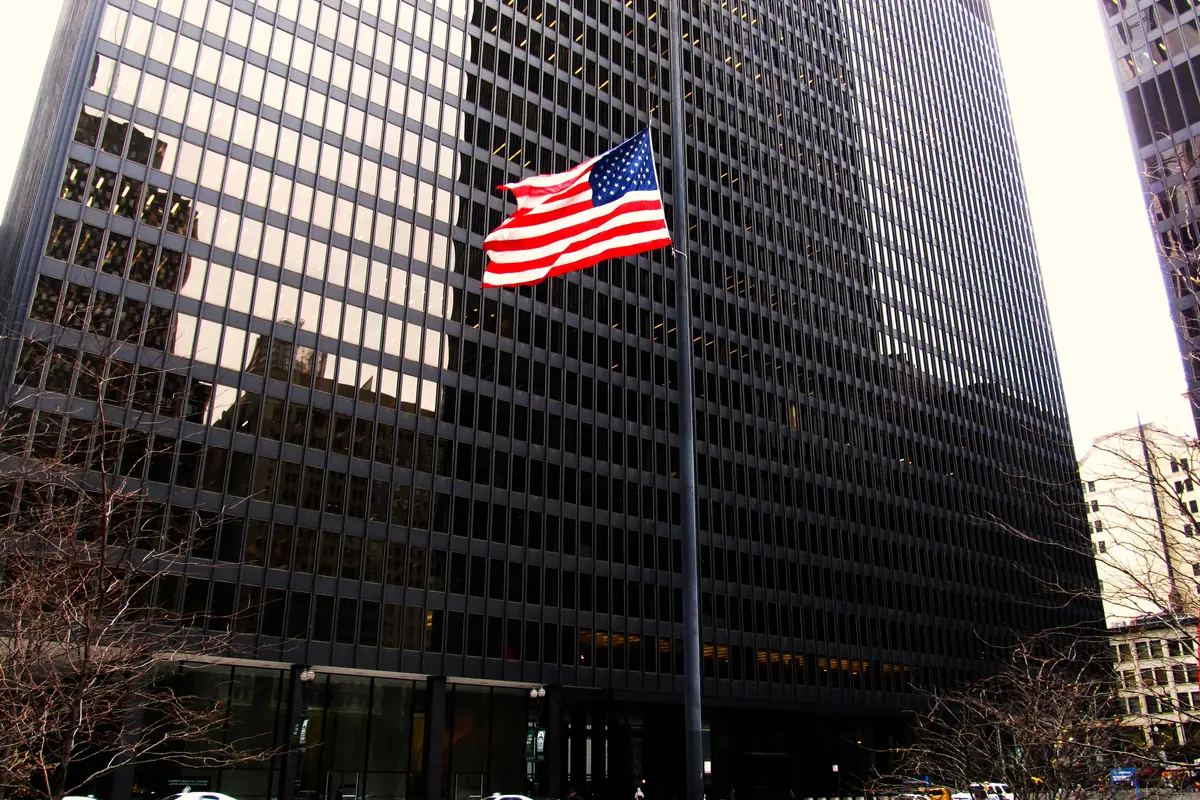
Original AI-assisted historical analysis based on the federal charging documents and Kishu Inu’s surviving contract repository. The article separates allegations from established records and makes no price forecast or investment recommendation. The cover is Ken Lund’s photograph of the Dirksen United States Courthouse in Chicago, where the case was filed. It is not token artwork, transaction evidence or proof of wrongdoing. The exact Wikimedia Commons file page credits Ken Lund and licenses the photograph under CC BY-SA 2.0. The image was cropped, resized and converted to responsive WebP files, with the adaptation shared under the same license. Corrections: Hello@dev.cooking.