
_-_img_02.jpg)
Before MOODENG was a ticker, Moo Deng was a real animal with a birth story, a public naming vote and a home at a Thai zoo. That order is the most important fact in this case. The meme did not begin with a mint address. A separate token project attached itself to attention that already existed.
This sixth Meme Autopsy is historical research reviewed on October 6, 2026 UTC. It is not breaking news, a price forecast or a claim that the token committed an intellectual-property violation. It asks a narrower question: what evidence connects the real hippo, the internet meme and the Solana asset, and where does that connection stop?
The zoo created the name in public
Khao Kheow Open Zoo’s original naming announcement said the female pygmy hippo was introduced to visitors on July 25, 2024. The zoo invited the public to choose among three Thai names: Moo Deng, Moo Daeng and Moo Sap. The animal already had parents, a habitat and a public institution responsible for her before she had a crypto ticker.
On August 20, the zoo announced the result. More than 20,000 votes were recorded, and Moo Deng was the winning name. That is a documented community action, but it was a zoo naming contest. It was not a token governance vote, a presale or permission for a financial product.
This distinction sounds obvious until the same name and face appear on trading screens. Internet culture compresses context. The animal, the photographs, the nickname, fan art and the token can look like one continuous brand even when they come from different actors and carry different rights.
The asset identity is one Solana address
The asset examined here is the Solana token at:
ED5nyyWEzpPPiWimP8vYm7sD7TD3LAt3Q3gRT
The MOODENG project site prints that address and describes a supply of 989,946,611 tokens. The Solana Explorer displays the same account, and HTX used the same address in its September 23, 2024 listing notice. Those three references are enough to identify the specific asset this case discusses.
They are not a safety certificate. A block explorer shows an account. A project website states the project’s own claims. An exchange notice identifies what the exchange planned to list. None of those records proves that a zoo licensed the token, that every holder understood the relationship or that the asset was suitable for any buyer.
The need to use the address is practical, not ceremonial. Search results contain other tokens with the same animal’s name. A reader who relies on a ticker or mascot alone can end up studying, buying or accusing the wrong asset.
The token site draws its own boundary
The project site calls itself a fan page and presents the hippo as living on Solana. More importantly, its current disclaimer says the information and token are not affiliated with, endorsed by or supported by any entity in Thailand. That is the project’s own statement, not an inference from silence.
The disclaimer does useful work because the rest of the page borrows the emotional continuity of the meme. It tells the animal’s story, uses her name and invites visitors into a token community. The page can create a strong cultural association while still disclaiming an institutional one.
Readers should therefore separate two propositions:
- The token is inspired by the real Moo Deng.
- The token is an authorized financial or commercial project of the zoo.
The reviewed records support the first proposition. They do not support the second. The project’s own disclaimer points the other way.
The zoo built a separate commercial track
The Zoological Park Organization of Thailand later opened an official contest for a Moo Deng product logo. The call offered a 10,000-baht award and directed entries to the organization’s business-development office. It set an October 7, 2024 submission deadline.
That record does not decide every trademark or copyright question. It does show the public institution creating its own process for products bearing Moo Deng’s identity. The process had an organizer, rules, a contact channel and a selection path. The Solana token site, by contrast, identifies itself as a separate fan project and disclaims Thai institutional involvement.
This is the unusual lesson in the case. “Community-owned” language does not erase upstream identity. A meme can be culturally shared while a photograph remains copyrighted, a name can be commercially managed, and a token can remain unaffiliated. Those conditions can all exist at once.
Listings made the address easier to recognize, not more official
HTX scheduled deposits for the identified token on September 23, 2024 and withdrawals for the next day. Other venues later displayed the same asset, but one dated listing is enough to establish a key change: the address moved from a launch environment into a centralized exchange’s product catalog.
That increased distribution did not convert the token into a zoo-issued asset. An exchange listing answers which token the venue supports and when its services open. It does not answer who created the underlying meme, who controls the animal’s commercial identity or whether the inspiration approved the financial product.
The same caution applies to market size and price history. This case does not use a peak market capitalization as proof of cultural legitimacy. Market figures depend on venue, time and liquidity. A large number can document trading interest, but it cannot manufacture an affiliation that the project itself disclaims.
The dated receipts
| Date | What the reviewed record establishes |
|---|---|
| July 25, 2024 | The zoo says it introduced the unnamed female pygmy hippo to visitors and opened a public naming process. |
| August 20, 2024 | The zoo announced that more than 20,000 votes selected Moo Deng. |
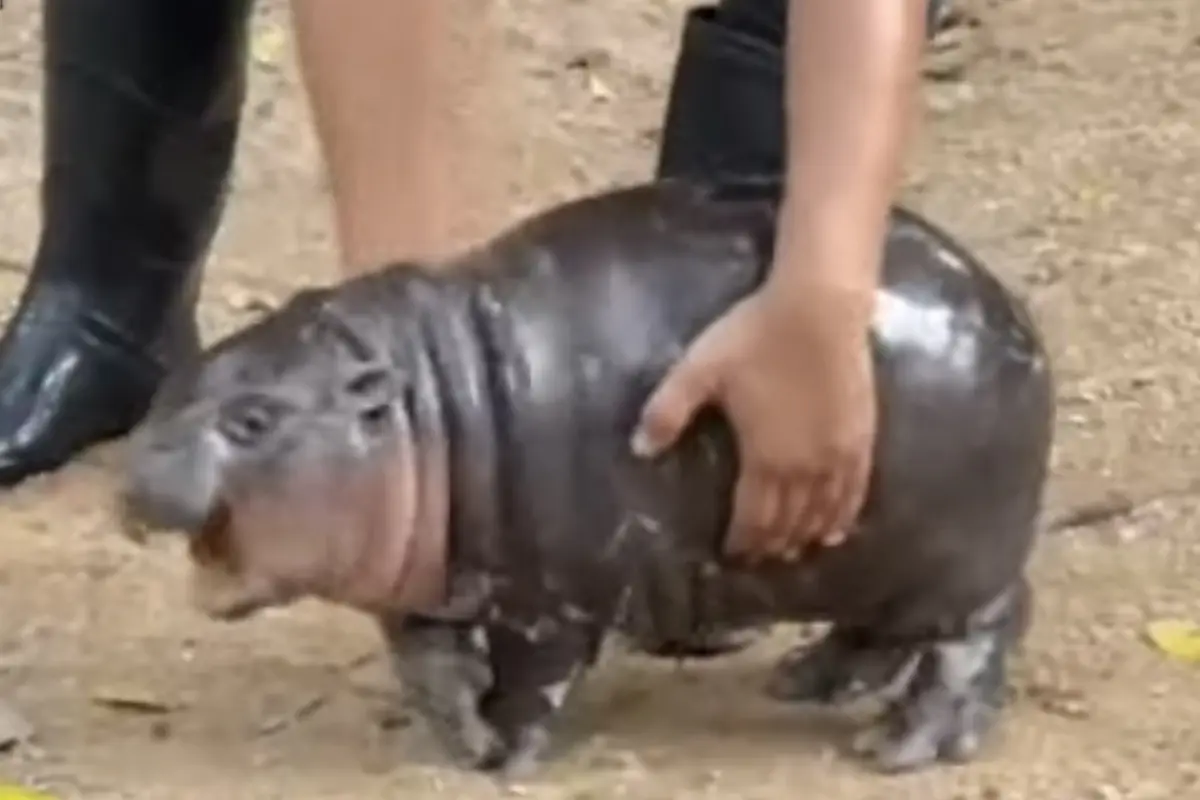
| September 10, 2024 | The licensed documentary still used here shows the real Moo Deng at the zoo. |
| September 23, 2024 | HTX published a listing notice using the same Solana address shown by the token project. |
| October 7, 2024 | The Zoo Organization’s official Moo Deng product-logo contest reached its submission deadline. |
| October 6, 2026 | Dev.Cooking rechecked the token site, address, institutional records and image license for this case. |
Verified, disputed and unknown
| Status | Finding |
|---|---|
| Verified in reviewed records | The zoo’s public naming process and result; the real animal shown in the licensed image; the token project’s displayed supply and Solana address; HTX’s use of that address; the Zoo Organization’s separate product-logo process; the token site’s current non-affiliation disclaimer. |
| Disputed or not established | No reviewed primary record establishes that the zoo endorsed, issued or licensed this Solana token. This article does not decide whether any particular use of the name or imagery violated Thai or other law. |
| Unknown in this review | The launch wallet’s controller, a complete early-holder map, every image’s permission history, whether any token-linked contribution reached the zoo, and what each buyer believed about affiliation. |
The case leaves a better question than “Is this the real Moo Deng coin?” There is a real hippo, and there is an identifiable token. Authenticity is not the same as authorization. The useful question is: which exact address is being discussed, and what primary record connects that address to the institution whose story gives it value?
For related checks, read our token-launch signals guide, liquidity and exit guide and security evidence framework. More foundations are in Learn.
Reporting and image notes
Original AI-assisted document research and analysis. Thai zoo records were reviewed in the original language and summarized in English. Project, explorer and exchange records were used to identify the asset, not to certify it. No interviews, private records, new wallet tracing, legal conclusion or price analysis are claimed. The documentary image is a still from MGR Online VDO, licensed CC BY 3.0; Wikimedia Commons records that a reviewer confirmed the source license on September 17, 2024. It was cropped, resized and converted to WebP, with no fabricated elements. Corrections: Hello@dev.cooking.