

SQUID did not merely suffer a thin market in late 2021. Its own archived rules described a system in which buying created limited selling credit, another token was needed to sell, and only one SQUID trading pair received official support. Days later, Binance said the project’s founders had drained the liquidity pool.
This thirteenth Meme Autopsy is historical research, not breaking news. It reconstructs what the project disclosed, what the surviving contract page can establish and what Binance later reported. It does not treat every contemporary loss estimate or wallet attribution as verified.
The project advertised friction as a feature
The archived SQUID whitepaper called its design an “anti-dump mechanism.” Under the paper’s stated rules, buying SQUID generated selling credit at a two-to-one ratio. A holder without enough credit could not sell the amount requested. The paper also said Marbles tokens were required for SQUID sales and would be burned during the process.
Those were not ordinary descriptions of price impact. Price impact means a trade can execute at a worse average price as it consumes available liquidity. The SQUID paper described an additional eligibility gate that could stop a sale before pool depth became the main question.
The same paper instructed users to trade only the SQUID-BNB pair on PancakeSwap and to disable multihop routing. It advertised six future game levels with increasingly large SQUID entry fees. Ten percent of entry fees was assigned to a developer wallet and 90% to a reward pool. These promises framed restricted selling as part of a play-to-earn system rather than as an exit hazard.
The surviving contract record has limits
The BscScan token record identifies the historical contract as 0x87230146e138d3f296a9a77e497a2a83012e9bc5, with a maximum supply of 800 million SQUID and source submitted for verification on October 21, 2021.
The verified source also shows a proxy design. An administrator address could call approveTo and point the proxy at a different implementation contract. That matters because the code a block explorer displays today is not automatically a frozen copy of every rule that governed transfers at every moment in 2021. The current page supports the contract identity and upgrade structure. It should not be stretched into proof that the presently displayed implementation contains the historical selling-credit logic described in the whitepaper.
This is a useful evidentiary boundary. A marketing document can establish what the project told readers. A proxy contract can establish that implementation logic could change. Neither record, standing alone, recreates every user’s attempted sale.
The liquidity drain was a separate failure
On November 4, 2021, Binance published its account of the incident. It said users had reported that they could not sell SQUID, the token had no official association with Netflix, and the project’s founders drained the liquidity pool within minutes. Binance said its security team was tracing the developer addresses, blacklisting associated addresses from its exchange and providing findings to law enforcement.
That statement is a primary incident disclosure from a large exchange, not a court judgment. It documents Binance’s investigation and conclusions at the time. It does not establish a criminal conviction, identify every person behind the project or prove a loss amount for each holder.
It also separates two mechanisms that are often collapsed into the word “rug.” The published sell restrictions made exits conditional while the pool existed. Removing liquidity then impaired the market itself. A trader investigating only one layer could miss the other.
A dated reconstruction
| Date | What the reviewed record says |
|---|---|
| October 20, 2021 | The whitepaper lists the SQUID presale date. |
| October 21, 2021 | The paper lists the PancakeSwap launch date, and BscScan says the source was submitted for verification. |
| October 28, 2021 | The archived PDF’s embedded creation metadata records this date. |
| October 31, 2021 | The Internet Archive preserved the whitepaper version reviewed here. |
| November 1, 2021 | Wired’s reconstruction dates the collapse to this day; Binance later described the pool drain without giving a transaction-level loss figure in its post. |
| November 4, 2021 | Binance published its investigation update and said the founders drained the liquidity pool. |
| October 11, 2026 | Dev.Cooking rechecked the archived paper, exact contract page and image license. |
Verified, reported and unresolved
| Status | Finding |
|---|---|
| Verified in reviewed records | The archived whitepaper imposed selling-credit and Marbles requirements, named one supported pair and allocated 10% of entry fees to a developer wallet. BscScan records the exact proxy contract and its October 21 verification submission. |
| Reported by Binance | Users could not sell, the token was unaffiliated with Netflix, the founders drained the liquidity pool, and Binance began tracing and blacklisting related addresses. |
| Not established here | The identity of every operator, a complete wallet-to-person map, each holder’s realized loss, a court finding, or one independently reconciled gross-drain figure. Published estimates vary, so this article does not convert them into a confirmed loss total. |
SQUID’s lasting lesson is not that every token with unusual rules is fraudulent. It is that a quoted price is meaningful only when the route, token logic and underlying liquidity all permit an exit. Here, the project’s own document warned that selling was conditional before the exchange investigation described the pool being emptied.
Continue with how to read liquidity pools and order books, why market cap is not exit liquidity, the token-launch evidence checklist and the meme-coin learning hub.
Reporting and image notes
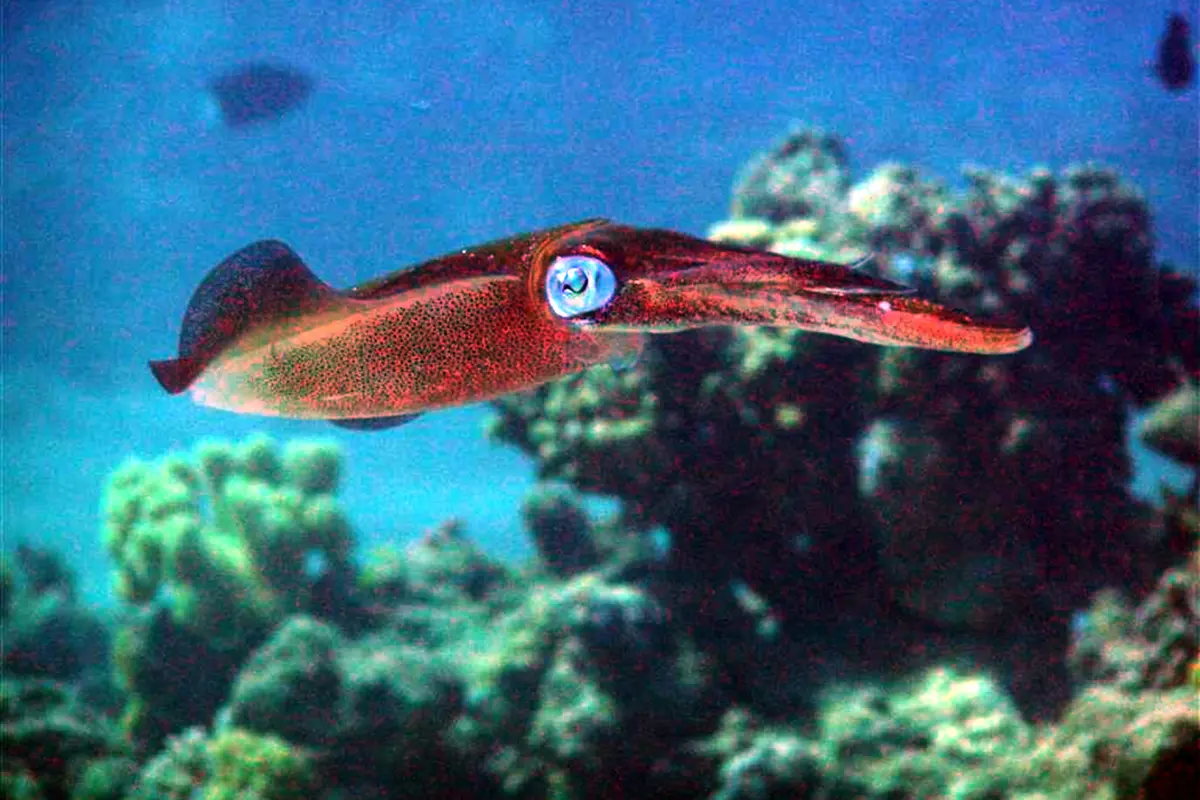
Original AI-assisted historical analysis based on the archived project whitepaper, the exact BscScan contract record and Binance’s incident account. It makes no price forecast or investment recommendation. The cover is Silke Baron’s photograph of a real bigfin reef squid in Egypt. It is species context only, not SQUID token artwork, a Netflix image or market evidence. The exact Wikimedia Commons file page credits Baron, records a Flickr license review and applies CC BY 2.0. The 2020 color-adjusted Commons version was cropped, resized and converted to responsive WebP files; no objects were added or removed.