
BEHIND THE INTERFACE
Chains & infrastructure
23 original articles · News, research & explainers
Start with the right question.
The same wallet interface can hide very different execution and settlement models. This desk follows the networks and infrastructure beneath crypto applications, from chain design and transaction costs to historical data and delegation. We focus on the questions that remain useful when a product name changes: where an action executes, how its result is established, which asset pays the fee and which additional service the route depends on. Protocol documentation can describe an intended mechanism without proving that every application uses it correctly. Likewise, a missing historical RPC response is a data-coverage limit, not proof that an event never happened. Read infrastructure announcements alongside the explanatory guides below. They provide context for deciding which record to inspect and which conclusion the available evidence can actually support. When comparing networks, use the cost and security assumptions of your specific operation rather than a permanent ranking based on a headline transaction rate.
Jito’s Direct Bundle Route Removes a Hop, Not the Auction
Jito has disclosed BAM’s direct bundle route and early inclusion figures. Access remains whitelisted, and its Alpenglow plan includes a temporary return to legacy submission.
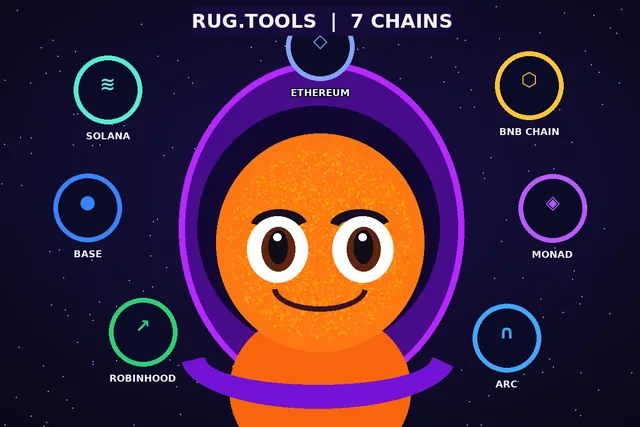
Crypto Has a Scam Problem. Rug.Tools Wants to Make It Harder for Scammers to Hide.
With free token risk scans across seven blockchain ecosystems, Rug.Tools is betting that better on-chain intelligence can help people ask the right questions before buying.
SKALE Links Its IMA Bridge Exploit to Exposed Validator Ports
A new SKALE update says public exposure of internal validator services enabled the August IMA Bridge attack. The bridge remains paused and final losses remain undisclosed.
Solana DvP Is Open Source, but Institutional Use Still Needs Proof
Solana Foundation released audited atomic-settlement code with J.P. Morgan input. The code is public; production adoption is not yet documented.

Blockchain Bridges: Seven Checks Before a Cross-Chain Transfer
Learn source and destination networks, native versus represented assets, permissions and the separate stages of a bridge transfer.

Ethereum, Solana, Base and BNB Chain: What Actually Changes for Users?
Compare execution models, network identity, native fee assets and the checks that matter before using Ethereum, Solana, Base or BNB Smart Chain.

Gas Fees Explained: Calculate the Cost of the Whole Transaction
Understand gas units, native fee assets, priority fees and why a low network fee does not describe the full cost of an onchain action.
Layer 1, Layer 2 and Sidechains: Follow the Security Boundary
Learn how execution, settlement and independent consensus change the questions to ask about a blockchain network.

The DePIN Question That Matters After the Hardware Map: Who Pays?
Separate installed capacity, useful service and customer-funded demand before evaluating a physical infrastructure network.

Market Cap Is a Calculation. Liquidity Is a Different Question.
A worked example explains why a token’s displayed valuation cannot tell you what a large trade will return.

A Beginner’s Guide to Modular Blockchains
Understand execution, settlement, consensus and data availability by tracing one hypothetical application through its dependencies.

How to Read a Stablecoin Reserve Report Without Overreading It
Reserve composition, report dates and the route to redemption answer different questions. Keep them separate.

Base’s Unified Stack Makes Release Ownership a Product Question
A retrospective on Base’s consolidation plan and why builders should understand who packages the software they depend on.

Why an RPC Response Can Be Correct and Still Incomplete
Build blockchain research that distinguishes present-state answers from historical coverage and missing evidence.

Smart Wallets Need Better Permission Screens, Not Just Fewer Clicks
EIP-7702 and ERC-4337 provide useful primitives; product teams still have to explain the authority a user grants.

Solana Account Ownership Is Not the Same as Token Authority
A practical guide to reading owner fields, signing authority and mint controls without mixing their meanings.

Ethereum’s Q2 Grant Ledger Shows Why Infrastructure Funding Deserves Attention
A retrospective look at the Foundation’s disclosed awards and the harder question of whether funded work becomes usable infrastructure.

Ethereum’s Transaction Assertions Proposal Puts Outcomes at the Center
Today’s Ethereum Foundation research asks a better wallet question: what must still be true after a transaction executes?

Glamsterdam on Sepolia: The Builder Checklist Before October 6
Ethereum’s scheduled testnet upgrade is a practical compatibility exercise, with mainnet timing still unannounced.

Solana’s Harmonia Program Tests the Missing Piece of Tokenized Funds: Distribution
With an October 24 application deadline, the useful question is how a tokenized product reaches an eligible customer.

The New Builder Stack: AI Agents, Onchain Data and Automation
An original architecture for useful crypto agents: bounded tasks, traceable evidence and explicit execution permissions.

What Makes a Crypto Project Worth Watching?
A repeatable research method for judging delivery, user value and control without mistaking attention for execution.

How to Read a Token Launch Without Getting Cooked
Build a launch timeline that separates token mechanics, market activity and claims about who controls the supply.