
HOW THE TRADE WORKS
Token mechanics
13 original articles · News, research & explainers
Start with the right question.
A meme token is still a technical asset. It has an identity, a supply model, a distribution and a route through which buyers exchange another asset for it. This desk connects those pieces without turning a checklist into a safety guarantee. Start with token identity, then inspect permissions, holder structure and the market used for your intended trade. A large quoted market capitalization cannot answer a liquidity question. A holder count cannot identify how many independent people bought. A removed authority cannot reconstruct what happened before it was removed. The lessons below explain those gaps through practical examples and primary documentation. They are designed to help you ask a more precise follow-up question when a scanner, explorer or trading interface shows a reassuring badge. Check which field the badge measures, the time of the observation and the evidence it leaves out. The goal is a readable record of what you know, what you inferred and what still needs verification.
The Token Address Stayed the Same. Who Can Change Its Code?
A meme token can keep its address while a proxy changes the implementation behind it. Trace the upgrade route, controller and block-specific evidence before relying on an old review.
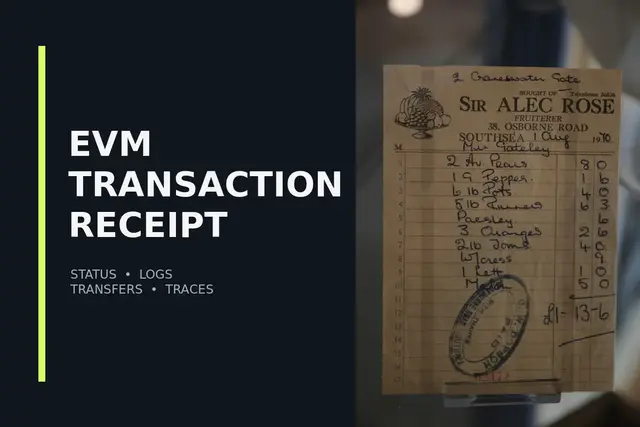
Successful Is Not Safe: Read an EVM Transaction Receipt in Five Layers
A transaction hash is only the start. Separate the signed envelope, execution status, logs, token-transfer decoding and call trace before drawing conclusions.

A First-Block Buyer Is Evidence of Speed, Not Identity
An early Solana buy can prove timing and execution. Learn what it cannot prove, how to reconstruct launch order and what evidence supports an insider link.
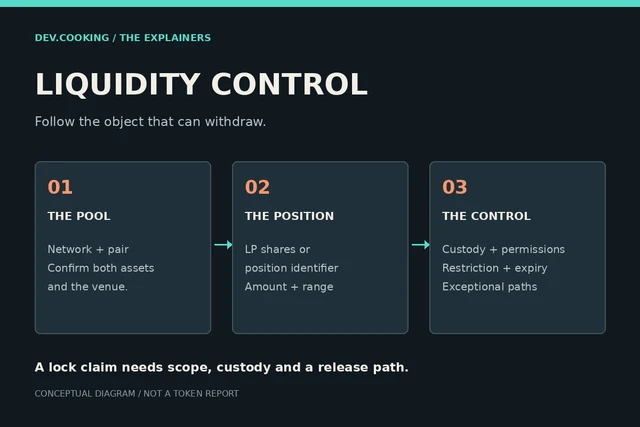
Locked Liquidity? Identify the Position That Can Actually Withdraw
A lock badge needs a pool, a position and a control path. Follow LP shares, concentrated-liquidity positions, expiry and coverage before interpreting a meme token's liquidity claim.
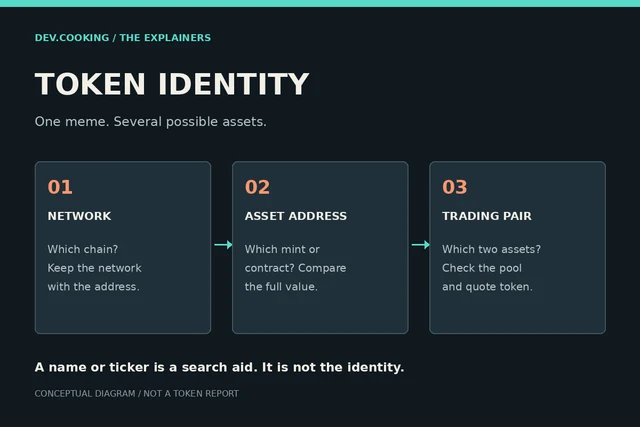
Same Ticker, Different Token: Build an Identity Check Before You Trade
A familiar meme name can point to unrelated assets. Learn how to verify network, mint or contract, project source and trading pair before interpreting a chart.
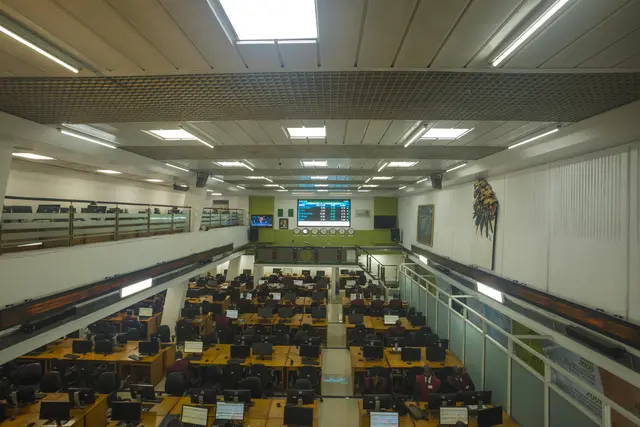
Liquidity Pool or Order Book? Read the Market Before the Meme
Order books and automated market-maker pools produce different evidence. Learn what a quote proves, what size changes and where token controls fit.
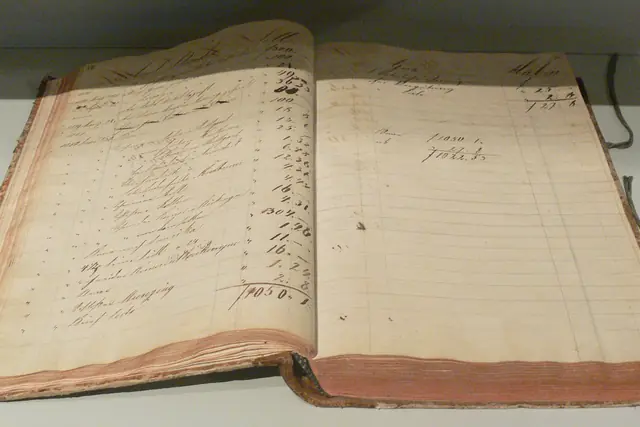
Renouncing a Token Contract Does Not Rewrite Its Launch
Ownership renunciation can disable privileged contract functions. It cannot erase earlier transfers, prove a fair launch or identify who controls the largest wallets.

A Token Holder List Counts Addresses, Not People
A top-holder table shows balances at addresses or token accounts. Learn how exchanges, pools and Solana account structure can distort a simple whale reading.
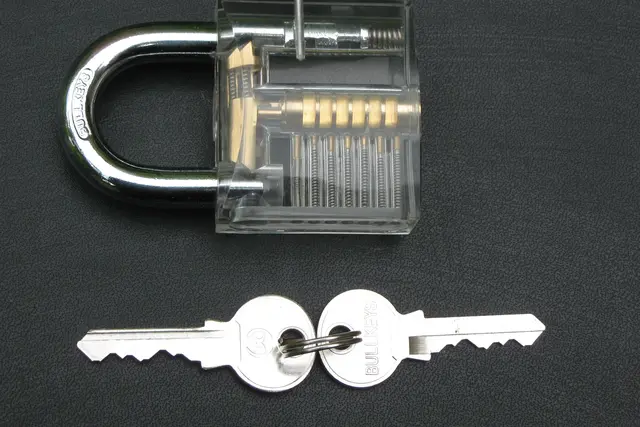
Token Approval Is a Spending Limit, Not a Transfer
An ERC-20 approval can let a contract spend tokens later. Learn how approve, allowance, transferFrom and signed permits fit together before connecting to a meme-token app.
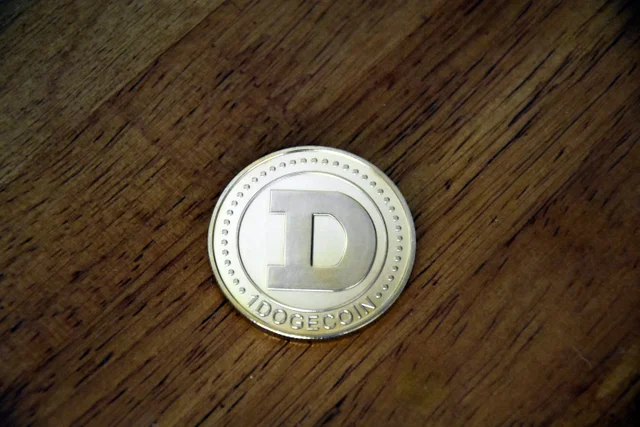
Dogecoin’s Unlimited Supply Does Not Mean Unlimited New Coins Overnight
DOGE has no final supply ceiling, but its issuance follows rules. A plain-English guide to block rewards, annual estimates and why supply arithmetic cannot predict price.

Smart Wallets Need Better Permission Screens, Not Just Fewer Clicks
EIP-7702 and ERC-4337 provide useful primitives; product teams still have to explain the authority a user grants.
Solana Account Ownership Is Not the Same as Token Authority
A practical guide to reading owner fields, signing authority and mint controls without mixing their meanings.

How to Read a Token Launch Without Getting Cooked
Build a launch timeline that separates token mechanics, market activity and claims about who controls the supply.